
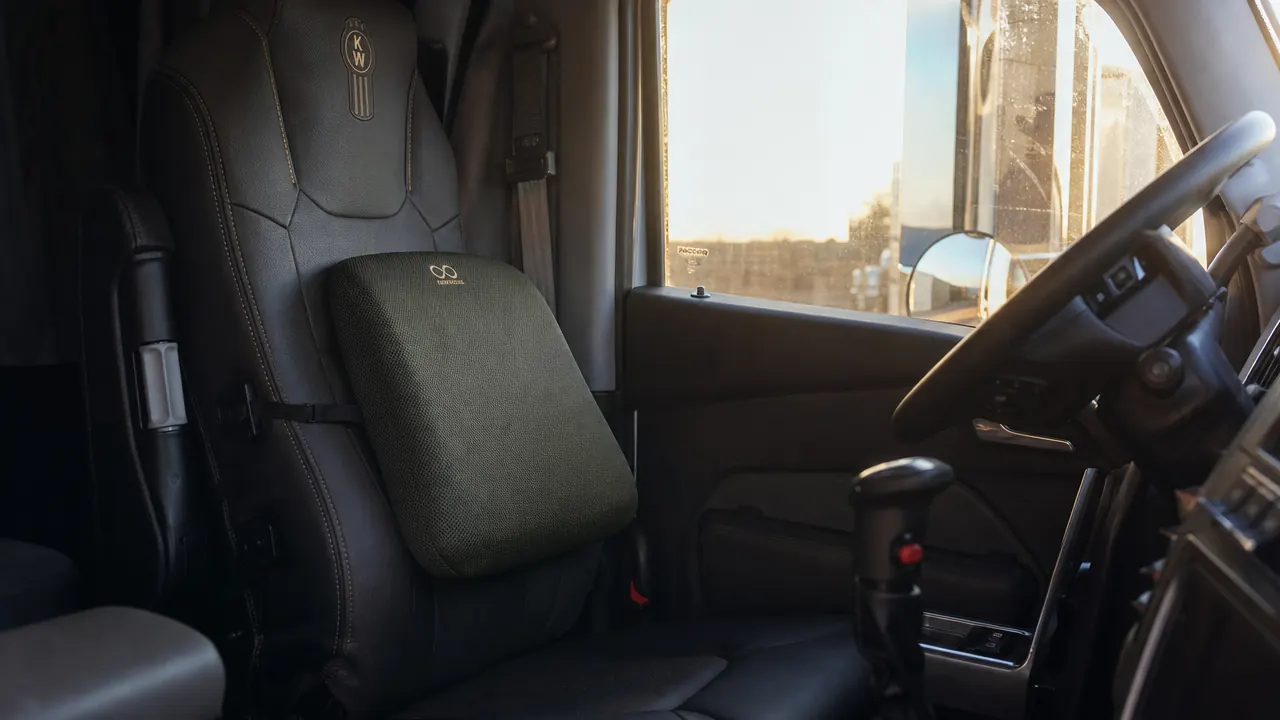
My name is Gary, and I have been driving OTR routes out of Nashville for nineteen years. By year twelve I was climbing out of the cab at every fuel stop because my lower back locked up so bad I walked like my boots had wet concrete in them. I tried the seat wedge, the rolled-up towel trick, the foam donut, and two different back braces. Most of them worked for about a week before I shoved them under the bunk. The QUTOOL lumbar support pillow is the one I have kept strapped to my seat for the past six months without yanking it off, and that alone says something.
This is the long-term framing of my experience. I used this pillow daily across multi-day hauls, short regional runs, and twelve hours of city delivery work filling in for a buddy. If you want the deep-dive on build quality, straps, and what nobody mentions in the product listing, check the companion piece over at the QUTOOL lumbar support honest review. What you are getting here is the six-month picture.
The Quick Verdict
A memory foam lumbar pillow that actually earns its spot on the seat after six months of hard daily use, with two honest caveats.
Amazon Check Today's Price →Your lower back has been putting up with bad seat ergonomics long enough. Check if it ships today.
The QUTOOL lumbar pillow has over 26,000 reviews on Amazon for a reason. Ships fast, fits most truck and car seats, and costs less than a single chiropractor co-pay.
Amazon Check Today's Price on Amazon →How I Have Used It
I run a standard Class A sleeper on a four-days-on, two-days-off rotation. Most hauls are between 9 and 11 hours of seat time per day. I installed the QUTOOL on day one of a six-month test block, starting in January when my back is typically at its worst. I did not use it as a cure. I used it as a daily tool the same way I use my mirrors, checked it every morning, repositioned it if it had slipped, and noted how my back felt after each run.
Positioning matters a lot with this pillow and it took me about three days to get it right. The dual adjustable straps let you dial it up or down the seatback. Too high and you feel it at your mid-back, which helps posture but does not touch the L4-L5 problem zone most drivers deal with. Drop it one notch lower so the center of the foam sits right at belt level and you start to feel the seat pushing your hips forward, which is exactly where you want to be.
I also used it outside the cab. Three nights a week I sit in a recliner watching TV after the shift and I unclip it and throw it behind me there too. That cross-use matters because it meant the cover got sweat and grime from the cab plus couch fabric wear, so I got a good sense of durability under real daily rotation.
What the Memory Foam Does Over Time
Fresh out of the box the foam is firm. Some guys in the forums say it is too firm and I get that, especially if you are coming from a softer rollup. Give it two to three weeks. Memory foam that is dense enough to hold shape under a 220-pound driver in a vibrating cab needs a break-in period. By week three mine had conformed enough to feel like it was made for my back specifically, which is the whole point of memory foam.
At the six-month mark the foam has not bottomed out. I sat on a plain seat for a day last month when I lent the pillow to a coworker running a fill-in shift, and the difference was immediate and significant. My lower back was noticeably more fatigued by mile 200 without it. That comparison test told me more than six months of gradual improvement could because the baseline was right there to feel.
The mesh cover has held up. The zipper still works, which means the cover stays cleanable. I have run it through a cold delicate wash cycle twice and it came out fine both times. The foam dried overnight in the cab with the windows cracked.
Where It Helped Most
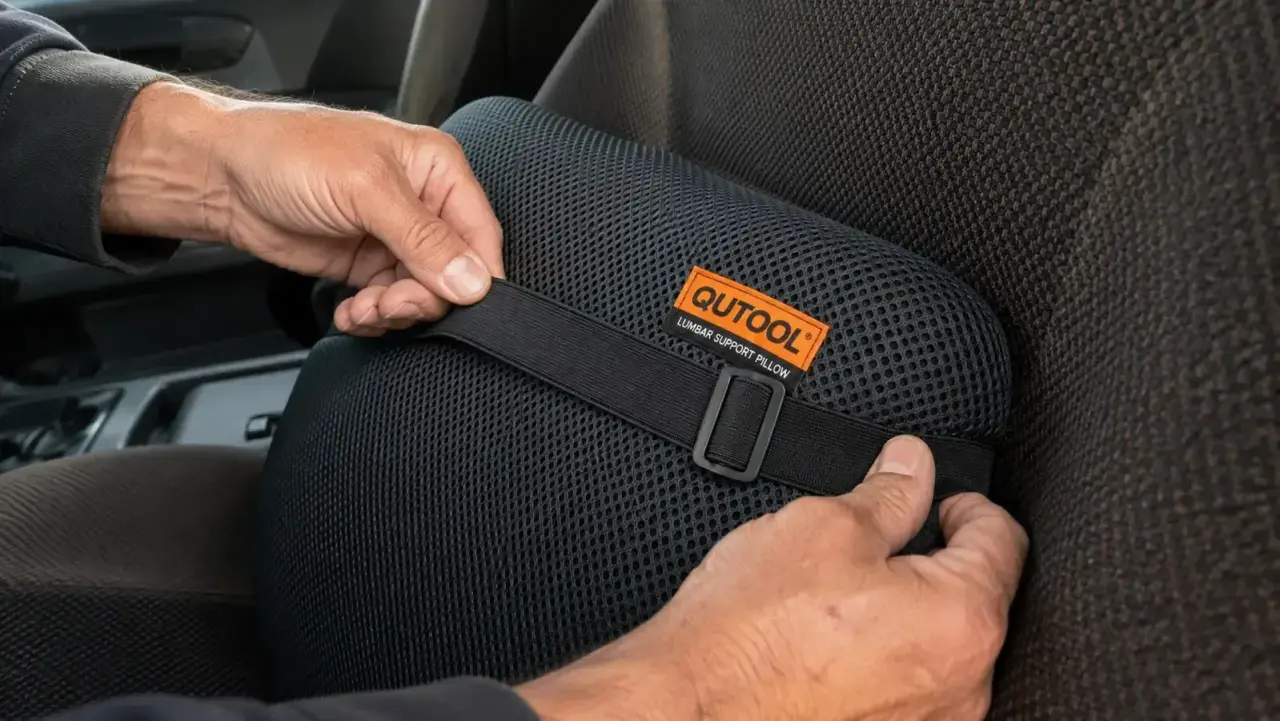
The biggest improvement I noticed was in the transition from seat to ground. Before I started using this pillow, getting out of the cab after a long haul felt like my spine needed five minutes to decompress before I could walk normally. By month two of consistent use that transition time had shortened noticeably. I was stepping down and moving in a straight line right away instead of grabbing the door rail and easing myself down.
Hip flexor fatigue improved as well. This surprised me because I did not expect a lumbar pillow to do anything for my hips, but better lumbar support means your pelvis sits in a more neutral tilt, which means your hip flexors are not fighting a constant forward lean all day. By month three I was noticing less tightness in the front of my hips when I stopped to load freight. If you are a driver and your hips feel constantly tight at the end of a run, some of that is posture from how your low back is supported, not just from sitting. Worth knowing.
I also noticed an improvement in the lower back fatigue that usually hits around the eight-hour mark. Pre-pillow, hours eight through eleven were the ugly stretch of each shift. Post-pillow, that wall pushed back to closer to hour ten. Still there, but the window is wider and the intensity is softer.
By month two the transition from cab to ground stopped feeling like decompression surgery. I was stepping down and walking straight. That one change made the whole thing worth it.
The Straps: Better Than Most, Not Perfect
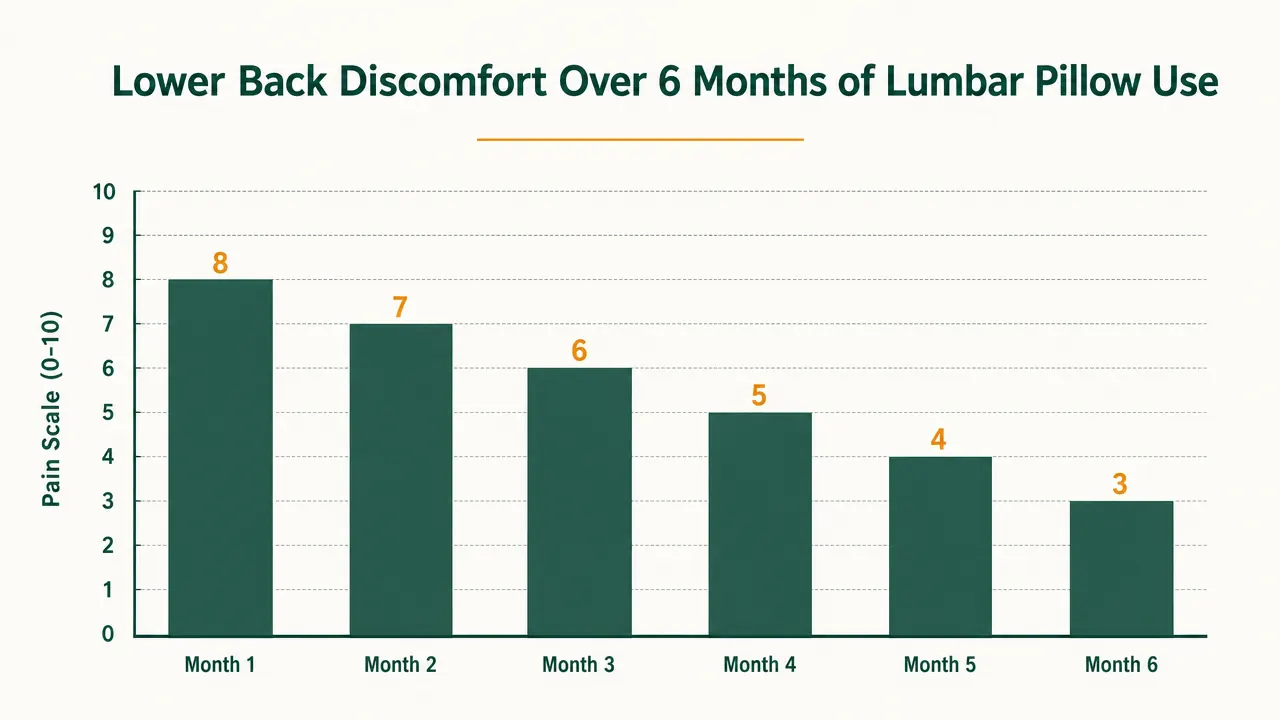
The dual adjustable straps are what set the QUTOOL apart from cheap single-strap pillows that slide south by noon. The upper strap goes over the headrest post and the lower strap cinches around the seat back. On a standard truck seat with a fixed seatback this setup holds all day without adjustment. I checked it maybe twice a week and it had barely moved.
The con is that on seats with a lot of lumbar articulation built in, the lower strap can work loose over time because the seat flexes. I tested it in a buddy's newer pickup that has an adjustable lumbar mechanism built into the seatback and the pillow did migrate down about an inch over an eight-hour day. Not a disaster but worth knowing if your seat is adjustable. You retighten the strap each morning and it holds. It is a one-second fix but it is a fix you have to remember.
The hook-and-loop on the strap buckles has shown minor fraying at the edges after six months of daily on-off. The function is still 100 percent. But if you are the type of person who notices gear showing age, you will notice it there first.
What the Pillow Does Not Fix
If you have an active disc injury or current sciatica flare, this pillow alone is not going to be your solution. It repositions your lumbar curve and reduces the compression from poor seated posture, but it does not decompress a bulge or take the pressure off an inflamed nerve root. I had a mild sciatica episode in month four, and during that week the pillow helped more than nothing but it was not enough on its own. I combined it with ten minutes on a foam roller each evening and the episode resolved in about ten days. The pillow kept my posture correct so I was not making things worse, which matters, but it is not a medical device.
Also: if you are over 250 pounds and you drive a bucket seat that already has almost no seatback support, you may find the standard QUTOOL too narrow across the back. It is designed for most standard and semi-truck seats but there is a wider variant in the QUTOOL catalog. The standard one fits me at 195 pounds with room to spare, so consider your body width as well as height.
If you want to understand the full breakdown of who this is best for and why some drivers should choose a different style of lumbar support, see the full 10 reasons lumbar support helps truck drivers breakdown.
What I Liked
- Memory foam holds shape after six months of daily use and does not bottom out under a heavy driver
- Dual adjustable straps hold position on fixed-seatback truck seats all day with minimal readjustment
- Mesh cover is washable and survives two cold-cycle machine washes without shrinking or deforming
- Noticeable reduction in cab-exit stiffness by month two, especially in the L4-L5 area
- Works equally well off the cab, on a recliner or office chair, so you get recovery value outside work hours too
- Over 26,000 Amazon reviews gives you confidence in long-run batch quality control
Where It Falls Short
- On seats with adjustable lumbar mechanisms the lower strap can work loose and requires daily re-tightening
- Strap buckle hook-and-loop shows minor edge fraying after six months, though function is unaffected
- Break-in period of two to three weeks before the foam feels conforming rather than stiff
- Standard size may feel narrow for larger-framed drivers over 250 pounds on wide bucket seats

Who This Is For
If you are a truck driver, rideshare driver, delivery driver, or anyone spending six or more hours a day in a seat with minimal lumbar support built in, and your main complaint is lower back fatigue and tightness that builds through the shift, this pillow is a direct solution to that exact problem. It is also a strong option if you work at a desk at home after a driving shift and need one piece that travels with you between the two environments. The price point is reasonable relative to the relief it provides and the six-month durability I observed.
Who Should Skip It
If you have a current, diagnosed disc herniation or active sciatica that requires medical treatment, start with your physician before relying on any seat pillow. If your truck seat already has a strong built-in adjustable lumbar, you may find a dedicated pillow creates too much arch and pushes you too far forward. And if you drive short urban runs of two hours or less, the benefit-per-dollar math is thinner because you are not accumulating the sustained loading that the pillow is specifically designed to offset.
Six months in, mine is still strapped to the seat. If your back is done tolerating the stock truck seat, this is where I would start.
The QUTOOL memory foam lumbar pillow fits most truck and car seats, ships fast on Amazon, and costs less than one tank of DEF. If it does not work for you, Amazon's return window gives you room to try it risk-free.
Amazon Check Today's Price on Amazon →