
By hour nine behind the wheel, my lower legs used to feel like they were wrapped in wet concrete. Ankles thick, calves tight, and that dull throb that starts around the knee and works its way down to the arch. I drove regional freight for eleven years before switching to local delivery runs, and the swelling problem followed me to both jobs. I tried the drugstore tube socks that claimed to be compression. I tried elevating my feet at rest stops. I tried drinking more water. None of it touched the problem the way I needed it to. That was the setup when I first ordered Copper Compression's six-pair pack about six weeks ago, and I have been wearing them every workday since.
This is not a short-term impressions piece. Six weeks of twelve-hour days, five days a week, is enough to actually know whether something works or just feels good the first morning. I can tell you what changed, what did not change, where the socks held up, and where they disappointed me. If you are a driver, a nurse, a warehouse person, or anyone else whose legs take a beating from hours of sitting or standing, this is written for you.
The Quick Verdict
Genuine graduated compression that reduces end-of-shift swelling and leg fatigue, sold at a price that makes daily rotation practical. Not a cure, but the most consistent tool I have found for keeping the legs manageable on a long run.
Amazon Check Today's Price →Your legs are swollen before the shift ends. Here is the fix I actually kept using.
Copper Compression Socks come in a six-pair pack so you have a clean pair every day of the week without hand-washing every night. Rated 4.5 stars by nearly 48,000 buyers, including a lot of people who work the same hours you do.
Amazon Check Today's Price on Amazon →How I've Used Them
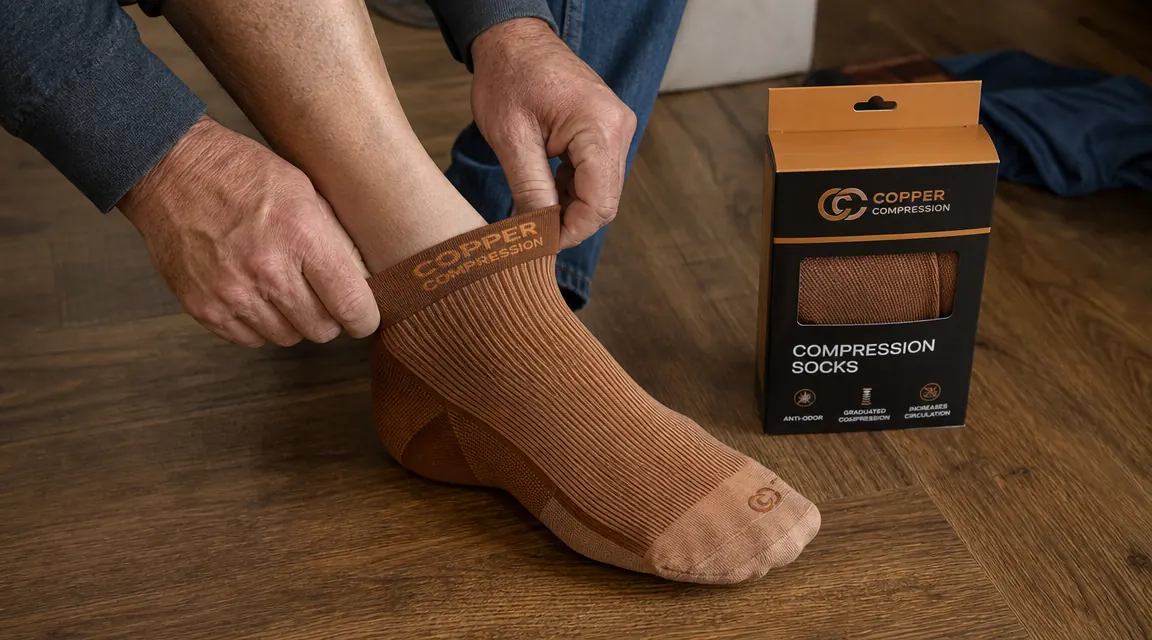
My routine is simple. I pull a pair on before I leave the house, while my feet are at their least swollen. That is the right time to put compression socks on, and it matters more than most people realize. I wear them for the full shift, which runs ten to thirteen hours depending on the route. I pull them off in the cab or on the dock at the end of the day, and my feet and ankles go straight into a pair of recovery sandals for the drive home. I cycle through all six pairs across the work week, wash them in a laundry bag on the weekend, and start over Monday.
The compression level is 15-20 mmHg, which is the over-the-counter range, the same you will find at a pharmacy. That is not medical-grade, but it is enough to do real work. Graduated compression means tighter at the ankle and progressively looser up the calf, which is what pushes fluid back up toward the heart instead of letting it pool. I drive with both feet mostly flat or right foot working the pedals, so the socks are working against gravity in a position where circulation is already fighting an uphill battle.
I also lent a pair to my sister-in-law, who is a floor nurse at a regional hospital. She logs twelve-hour standing shifts. Her experience was different from mine in the details but similar in the outcome: less swelling by end of shift, less foot fatigue, and no circulation issues that she noticed. Two different use cases, same product, similar benefit. I am keeping her experience in my back pocket as a data point.
One thing I did not expect to test was how they feel during a rest stop nap in the sleeper berth. I left them on for a two-hour break during a longer run and they were fine. Not uncomfortable for lying down, no circulation restriction I could feel. I do not recommend sleeping in them all night because you want your legs to do their own work during full rest, but for a mid-shift break they are not a problem to leave on.
What Changed at the Two-Week Mark
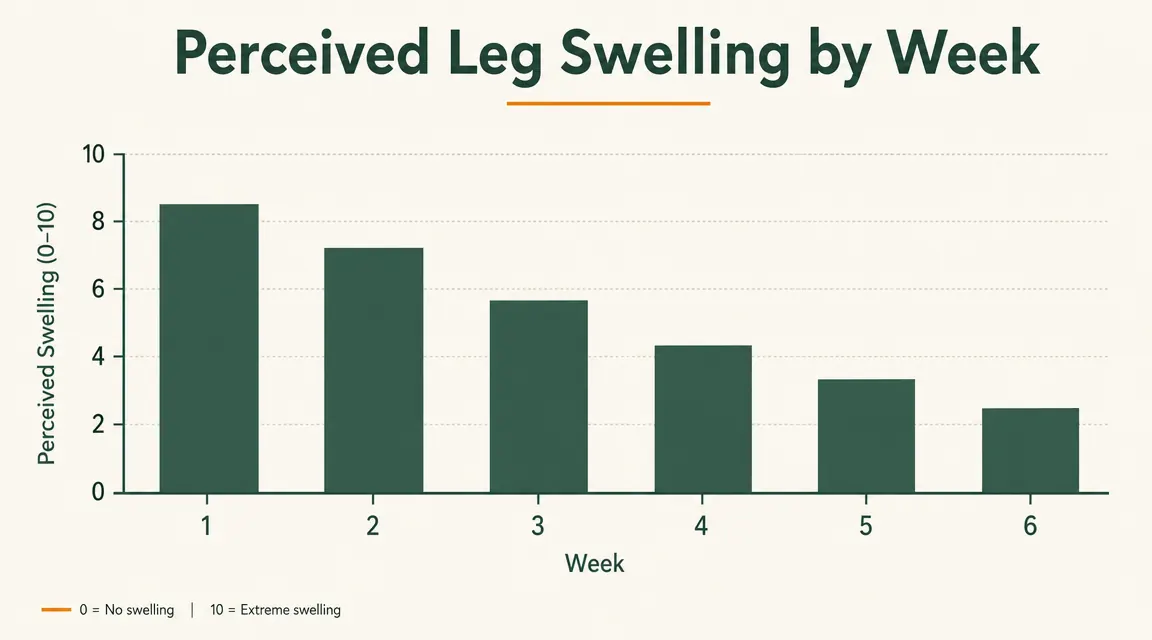
The first two weeks were not dramatic. Day one felt snug in a good way, and by the end of that first shift my ankles were noticeably less swollen than usual. But I did not get excited about one day. I have been burned by products that feel great for a week and then either stop working or fall apart in the wash. So I kept notes.
By the end of week two, I could tell the improvement was real and consistent. On the four days I wore the compression socks versus one day I forgot them at home, the difference was obvious enough that my wife noticed when I came in the door. On the sockless day, my ankles were visibly puffed by hour eight. On the sock days, the swelling was present but mild, and it resolved faster once I was off my feet. That comparison between a sock day and a no-sock day on back-to-back shifts is what convinced me this was not placebo.
Leg fatigue also improved in a way I did not expect. I thought the compression would just help with swelling. The reduction in that heavy, achy feeling in my calves by end of shift was actually more noticeable than the swelling change. Whether that is from better circulation or just the physical support of the compression fabric, I cannot tell you for certain, but the result was real.
By week four and five, I stopped noticing the socks during the day, which is the best thing I can say about a piece of gear. When you stop thinking about a tool, it has become part of the routine in the right way. The benefit is there, you just stop cataloging it. That is what happened. I noticed the socks when I forgot them, not when I was wearing them.
What Six Weeks of Daily Wear Actually Revealed
The socks held up well through repeated washing. I have been running them through the laundry on gentle cold and line-drying them, which is what the instructions recommend. After six weeks, the elastic is still firm and the compression feels the same as week one. I have had cheaper compression socks go slack after a dozen washes, so this was a real concern going in. So far, no issues.
The copper-infused fabric is worth mentioning because it gets used as a marketing claim all over the place without much explanation. The honest answer is that the copper does help with odor control. After a thirteen-hour shift, these socks smell notably better than standard moisture-wicking athletic socks in my experience. Whether copper does anything for circulation beyond the compression itself, I am skeptical, and I would not buy these for the copper alone. The compression is the mechanism. The copper is a bonus for smell management.
Sizing is worth paying attention to. I wear a size 11 shoe and the medium fits me correctly, snug through the arch and ankle without cutting off at the top of the calf. My brother-in-law tried a pair in his size based on the chart and said they were too tight through the calf after about four hours, and he ended up sizing up. If you are between sizes or have wide calves, go up. A compression sock that cuts circulation at the top is worse than no compression sock at all.
On the day I forgot the socks, my ankles were visibly puffed by hour eight. On sock days, the swelling was there but mild, and it resolved faster once I was off my feet. That back-to-back comparison was what convinced me.
The Honest Tradeoffs
Putting these on in the cab is not easy. If you are trying to pull compression socks onto dry feet after sitting for a while, the fabric grabs. I started carrying a small plastic bag to slip over my foot first, which helps them slide on. Some people use rubber gloves for grip. Either way, plan for it taking two or three minutes each morning. If your schedule does not allow for that, you will skip wearing them, which defeats the purpose.
They are not a solution for severe edema. If your legs are so swollen by midday that you are leaving indentations in your skin, or if you have been told by a doctor that you have circulatory disease, over-the-counter 15-20 mmHg compression is not going to be enough. You need a medical evaluation and likely prescription-grade socks at 20-30 or 30-40 mmHg. These socks are for prevention and management of normal work-related swelling, not for treating a medical condition.
The toe area runs a little warm. On hot days in a cab without great AC, or on a dock in summer, my feet ran noticeably warmer than usual in the afternoon. Not unbearable, but real. If you already struggle with hot feet, that is worth knowing. In cooler weather it is not an issue.

How These Compare to What I Tried Before
I have gone through a few different options before landing here. The CVS and Walgreens store brands work for maybe two weeks before the elastic goes limp and they become glorified thin socks. The single-pair compression socks you see at truck stops for four or five dollars are mostly useless, more of a feel-good purchase than an actual graduated compression product. I also tried a higher-end brand at around thirty dollars per pair, and while the compression was excellent, I was not going to wear a thirty-dollar sock in a work environment where it was going to get dirty and washed every day.
The six-pair pack from Copper Compression hits a sweet spot that I have not found elsewhere at this price. You get a full work week of rotation without ever having to wear a dirty pair, and the per-pair cost is low enough that you are not stressing about the laundry. That is what makes it practical for someone doing this every day, not occasionally.
What I Liked
- Genuine graduated compression at 15-20 mmHg that measurably reduces end-of-shift swelling
- Six-pair pack allows a clean pair every workday without nightly washing
- Copper fabric manages odor well on long, sweaty shifts
- Elastic holds compression after six weeks of regular washing
- Works for both seated occupations (driving) and standing occupations (nursing, warehouse)
Where It Falls Short
- Putting them on dry in the cab takes practice and a few minutes, easy to skip when rushed
- Runs warm in summer or hot cabs, not ideal for people who already struggle with foot heat
- Sizing runs snug through the calf for wide-legged folks, size up if in doubt
- 15-20 mmHg is not enough for severe or medically diagnosed edema, need a doctor for that
- Compression in the toe area can feel restricting if you have wide feet, check size chart carefully
Who This Is For
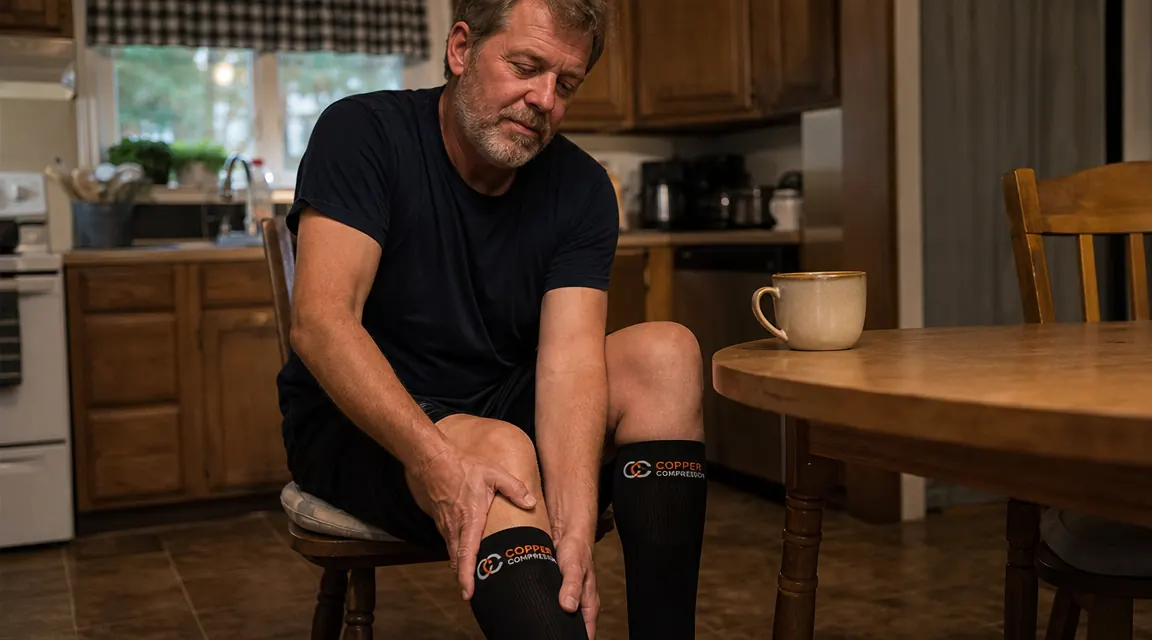
If you sit or stand for eight to fourteen hours at a stretch, deal with leg swelling that ranges from annoying to painful by end of shift, and want a practical daily solution that does not require a prescription or a doctor visit, these socks are a solid fit. Truck drivers, delivery drivers, rideshare operators, nurses, medical techs, warehouse workers, and people in trades who are on their feet all day will all get real benefit from consistent use. The six-pair pack format specifically suits people who need to wear these Monday through Friday without making laundry a daily chore. If you can commit to putting them on before your shift starts, every single day, they will work.
Who Should Skip It
Skip these if your leg swelling is severe or has been diagnosed as a medical condition. If you have deep vein thrombosis, peripheral artery disease, lymphedema, or any circulatory condition your doctor has flagged, over-the-counter compression is not the right starting point. Get a medical evaluation first. Also skip if you are not willing to commit to daily wear. I have talked to people who bought compression socks, wore them twice, did not love the experience of pulling them on, and quit. If you try them once a week, you will not see the cumulative benefit and you will decide they do not work. They require consistency the same way any recovery tool does.
Six weeks in, I am still wearing them every shift. That tells you more than any first-impression review.
Copper Compression Socks are the most practical daily compression option I have found at this price. The six-pair pack, the durability through washing, and the consistent 15-20 mmHg compression make them the easiest to actually use every day. Check the current price and size chart on Amazon before ordering.
Amazon Check Today's Price on Amazon →