

Short answer: magnesium glycinate wins by a wide margin, and magnesium oxide is barely worth calling a supplement for cramps or sleep. If you are a driver, a nurse, or anyone spending long hours in a seat and then waking up at 2 a.m. with your calf seized up like a vice, the form of magnesium you take matters more than the dose printed on the label. I learned this the hard way after buying a big bottle of cheap oxide tablets from a discount store because the milligram number looked impressive. Six weeks later the cramps were exactly the same, and I had made roughly thirty extra bathroom trips for my trouble.
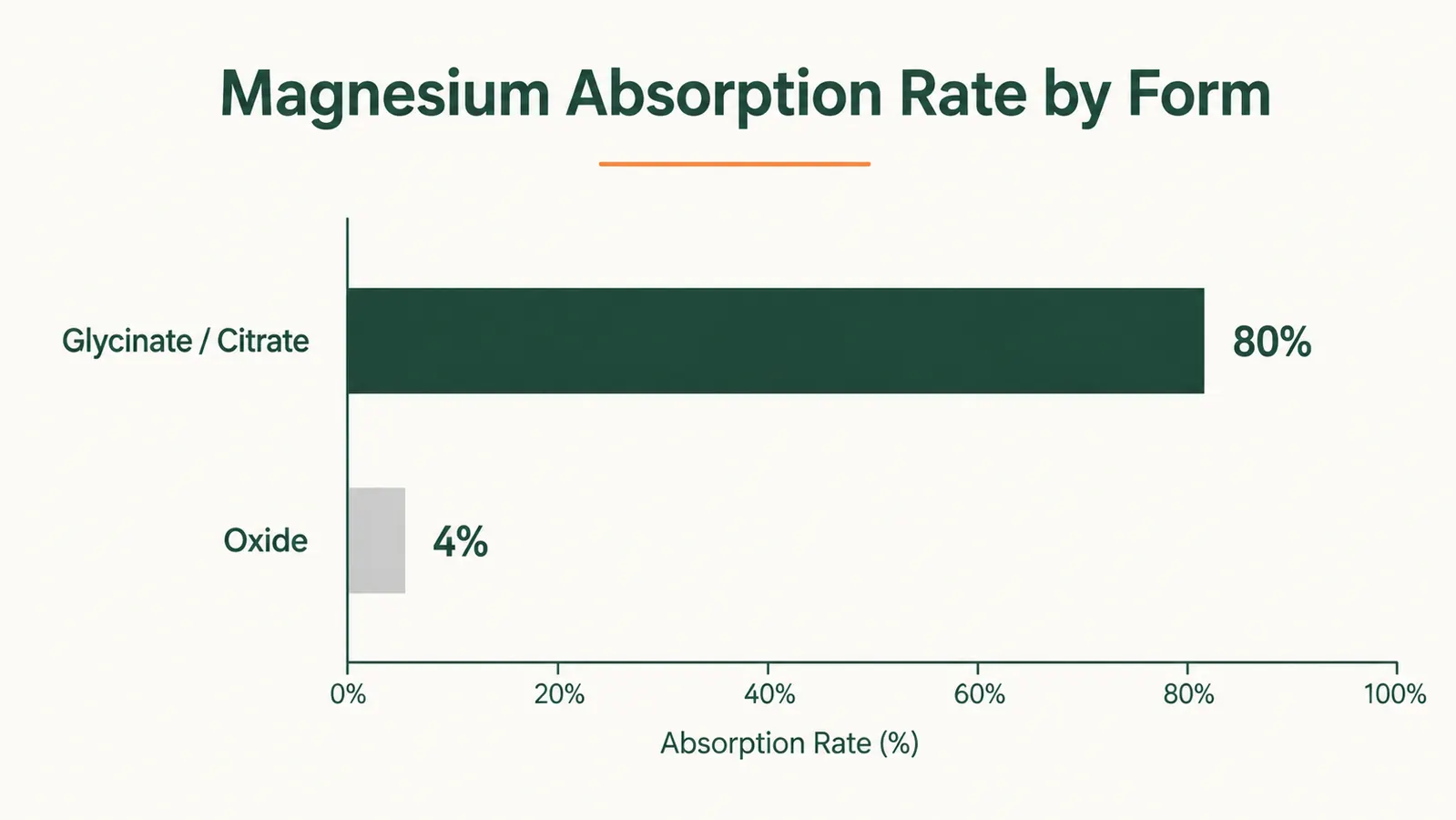
This is not complicated science. Magnesium oxide has an absorption rate in the range of 4 percent. The better-absorbed forms, glycinate and citrate in particular, run closer to 70 to 80 percent in human absorption studies. You are not comparing two supplements that work equally well at different price points. You are comparing a supplement that actually gets into your bloodstream to one that mostly stays in your gut and drags water in behind it. This comparison covers what separates them technically, which specific situations each one is actually suited for, and why the BioEmblem Triple Magnesium Complex is the bottle currently living in my cab door pocket. Not medical advice, check with your doctor before starting any supplement program.
| BioEmblem Triple Magnesium (Glycinate + Malate + Citrate) | Generic Magnesium Oxide Tablets | |
|---|---|---|
| Absorption / bioavailability | Approximately 70-80% absorbed via intestinal transport proteins; glycinate chelate is resistant to breakdown in the gut wall, delivering a high fraction into the bloodstream | Approximately 4% absorbed; oxide is poorly soluble and the vast majority passes through the bowel, pulling in water via osmosis rather than entering circulation |
| Stomach tolerance | Gentle on the gut; glycinate is amino-acid bound so it does not spike osmotic pressure in the intestine; malate and citrate are also well tolerated at standard doses | Poor tolerance at effective doses; loose stools, cramping, and urgency are common above 200 mg because the unabsorbed oxide acts exactly like a laxative, which is its original medicinal use |
| Forms included in one serving | Three distinct forms: glycinate (nervous system calm, sleep support), malate (muscle energy and daytime fatigue recovery), citrate (fast absorption, acute cramp prevention) | Oxide only; single mechanism, low absorption ceiling, no form-specific benefit for sleep or energy metabolism |
| Best for nighttime leg cramps | Yes; citrate absorbs quickly for acute cramp prevention while glycinate sustains overnight muscle magnesium levels so the cramps stay away through the whole sleep window | Not effective for most people at safe doses; the small fraction that does absorb is insufficient to meaningfully raise serum magnesium in muscle tissue |
| Best for sleep quality | Yes; glycinate has a calming, mildly sedating effect by supporting GABA receptor activity; most users report noticeable sleep improvement within one to two weeks at the standard dose | Minimal to no sleep benefit; oxide does not cross into the nervous system efficiently and the literature on oxide for sleep is sparse compared to glycinate |
| Cost per actually absorbed milligram | Higher sticker price per bottle, but cost per absorbed milligram is far lower because roughly 75 times more of the magnesium reaches circulation compared to oxide | Cheap per tablet, but functionally expensive: if you need 300 mg absorbed and you are only absorbing 4%, you would theoretically need 7,500 mg of oxide to match the absorbed dose, far past any safe intake level |
| Main practical downside | Higher upfront cost per bottle; two capsules per dose means a 90-count bottle is a 45-day supply, not the 100-day supply the tablet count on a cheap oxide bottle might suggest | Acts as a laxative at the doses required to approach a therapeutic cramp-relief effect; counterproductive for drivers and nurses who cannot be far from a bathroom during a twelve-hour run |
Where BioEmblem Triple Magnesium Wins
The triple-form approach is not just marketing language. Each form of magnesium in this blend serves a slightly different role in the body. Glycinate is the calming form. It binds to the amino acid glycine, and together they quiet muscle hyperexcitability, which is the underlying mechanism behind those middle-of-the-night calf seizures. If you are waking up at 2 a.m. grabbing your leg, glycinate is the form most likely to stop that over time. Malate pairs magnesium with malic acid, a compound involved in ATP production in the Krebs cycle. Drivers and warehouse workers dealing with that heavy, depleted feeling in the legs by the end of a long shift tend to respond well to malate because it supports the energy pathways that get beaten down by sustained physical and postural stress. Citrate is the speed form, fastest to be absorbed, and the one with the most human trial data on acute cramp frequency reduction.
When you combine all three in one dose, you are covering the overnight cramp window with glycinate, the daytime muscle fatigue angle with malate, and the fast-absorption cramp prevention angle with citrate. BioEmblem's 300 mg per serving delivers these across two capsules. I take mine right after dinner. Most of the cramp reduction showed up by around day ten for me, with the sleep quality improvement coming closer to week three. The bottle holds 90 capsules, making it a 45-day supply at the full two-capsule dose.

Where Magnesium Oxide Has a Legitimate Use
To be honest about it: magnesium oxide is not a worthless product. It is a legitimate over-the-counter laxative, sold clinically under the name milk of magnesia for exactly that purpose. If your problem is constipation, a low-dose oxide tablet is cheap and it works. Some headache researchers have looked at oxide for migraine prevention with modest results, because some magnesium does reach neurological tissue even at low absorption rates. And in clinical settings where doctors need to quickly raise a dangerously deficient patient's serum magnesium, high-dose oxide under supervision can move the numbers, though better-absorbed chelated forms are preferred for long-term use.
But for a truck driver or warehouse worker trying to stop nighttime leg cramps and sleep a full eight hours, oxide is the wrong tool. The dose needed to get meaningful magnesium into your skeletal muscle tissue would have most people making repeated, urgent bathroom trips. The better-absorbed chelated forms were developed precisely to solve that problem, delivering magnesium past the gut wall without triggering the osmotic laxative response. That is the core reason the form matters so much when your goal is cramp relief and sleep quality rather than bowel regularity.
If your current magnesium is not stopping the cramps, you are probably taking the wrong form.
BioEmblem Triple Magnesium Complex combines glycinate, malate, and citrate in one capsule. Rated 4.6 stars from over 31,000 reviews. Check current availability and today's price on Amazon.
Amazon Check Today's Price on Amazon →Who Should Buy Which
Buy BioEmblem Triple Magnesium if you are dealing with any combination of the following: nighttime leg cramps or restless leg sensations, poor sleep quality or difficulty staying asleep, general muscle tension and soreness after long days in a cab or on your feet, or that post-shift depletion feeling in the legs and lower back. Drivers and nurses especially tend to run low on magnesium because both jobs involve sustained physical and postural stress while also leaning on a diet heavy on fast food and convenience meals. The glycinate form is also commonly taken for generalized tension and nervous system calm, which matters if your run involves heavy traffic or high-stress deliveries and your shoulders are up near your ears by the time you hit the lot.
Stick with cheap oxide if you need a budget laxative, or if your doctor has prescribed a specific magnesium oxide formulation for a clinical purpose and told you to stick with it. Avoid starting any new magnesium supplement if you have kidney disease without clearing it with your doctor first, because the kidneys regulate magnesium excretion and impaired kidney function can cause dangerous accumulation. If you take antibiotics, blood pressure medication, or diuretics, ask your pharmacist before adding magnesium, as it can interfere with absorption of some common medications.
The difference between glycinate and oxide is not a small edge. It is the difference between a supplement that actually gets into your muscles and one that mostly acts like a very polite laxative. For leg cramps and sleep, the form is everything.

A Note on Dosing and What to Expect
The adult RDA for magnesium is roughly 400 to 420 mg per day for men and 310 to 320 mg per day for women. BioEmblem delivers 300 mg per serving, which gets you close to the daily target from supplementation alone without pushing past the tolerable upper intake level of 350 mg for supplemental magnesium. Most people get some dietary magnesium from whole grains, nuts, and leafy greens, so a 300 mg supplement is typically a sound bridge rather than a stack on top of an already-full tank. If you have been taking oxide and somehow tolerating high doses without gut issues, you might be absorbing somewhere between 8 and 20 mg of actual magnesium per day. That is not a therapeutic dose. It is closer to a rounding error.
Expect the first reduction in cramp frequency around day seven to ten with glycinate. Full effect for sleep quality usually takes two to three weeks, because you are rebuilding a deficit that accumulated over months or years of inadequate intake. Some people see faster results, especially those who are significantly depleted. If four weeks on the correct form and a proper dose produces no noticeable change, it is worth talking to your doctor about a serum magnesium blood test. Low serum magnesium sometimes points to a medication interaction, a gut absorption issue, or a diet pattern worth addressing directly. This article is not medical advice, and your doctor is the right person to assess your specific situation.
The Bottom Line
Magnesium oxide is a product that is excellent at solving the wrong problem. For constipation, it has a clear purpose. For leg cramps at 2 a.m., sleep quality, and muscle recovery in a body that sits behind a wheel all day, it is almost completely ineffective at the doses most people take. Magnesium glycinate, malate, and citrate are not just marginally better options. They are a fundamentally different category of product. BioEmblem's triple-form complex is the one I recommend because it covers all three absorption and function mechanisms in one serving rather than requiring you to buy three separate bottles. If you have already spent money on cheap oxide tablets and wondered why nothing seemed to change, the form is your answer. Switch before you give up on magnesium as a category entirely. For a deeper look at timing, specific dosing, and which foods block absorption, see the guide on how to stop leg cramps at night with magnesium, or the full review of BioEmblem Triple Magnesium for nighttime cramps and shift work recovery.
Ready to try the form that actually absorbs? BioEmblem Triple Magnesium has over 31,000 reviews and a 4.6-star rating.
Glycinate for sleep and calm, malate for muscle energy and recovery, citrate for fast cramp relief. All three forms in two capsules per serving. Check today's price and current stock on Amazon.
Amazon Check Today's Price on Amazon →