

Let me tell you what the listing page skips over. I spent about four months running BioEmblem Triple Magnesium Complex before I felt like I could write anything worth reading about it. I am a long-haul driver, 51 years old, 220 pounds, and my calves have been waking me up at 2 a.m. since at least 2021. A buddy at a truck stop in Amarillo told me magnesium fixed his restless legs overnight. That is not exactly how it went for me, and I want to tell you the more honest version before you order a three-month supply.
This is not the review that tells you magnesium is the magic fix you have been missing. If you want that, there are about 600 five-star reviews on Amazon that will give it to you. What I am going to give you instead is the stuff the label and the listing leave out: how the capsule math actually works, what the loose stool situation is about, who should not take this at all, and the situations where magnesium will help you exactly zero percent no matter how good the formula is.
The Quick Verdict
A well-designed triple-form formula that works if magnesium deficiency is actually your problem, but it is slow, not guaranteed, and wrong for anyone with kidney issues or certain medications.
Amazon Check Today's Price →Still waking up with cramps after trying everything else? The form of magnesium matters more than the dose.
BioEmblem uses three high-absorption forms (glycinate, malate, citrate) in a single 2-capsule serving. Check if it is still in stock before ordering a bottle.
Amazon Check Today's Price on Amazon →How I Have Been Using It and What I Actually Tested
I started at the label-recommended two capsules before bed, which delivers 300 mg of elemental magnesium total across the three forms. I kept a simple notes app log: whether I woke up with cramps, how many times I was up, and how I felt climbing out of the bunk in the morning. I ran four weeks at the standard two-capsule dose, then tried bumping to three capsules for two weeks to see if anything changed, then came back down to two. I also tried it with and without food, and I tried it mid-afternoon on a couple of runs to see if the timing mattered for muscle tension during the day.
One thing I want to be clear about up front: I am not a doctor, and nothing in this review is medical advice. If you have kidney disease, take blood pressure medication, antibiotics, or any diabetes medication, you need to talk to your doctor before adding any magnesium supplement. That is not a liability disclaimer I am copying from somewhere, that is a real heads-up I will explain in full below.
I also want to name the companion review if you want a different angle on this product. My three-month long-term use review of BioEmblem Triple Magnesium covers the arc of results over time and what consistent use looks like. That piece is written from the angle of what improved gradually. This one is the honest-cons version: what nobody tells you before you buy.

The Capsule Math Nobody Spells Out
Here is the first thing that trips people up. The label says 300 mg magnesium. The serving size is two capsules, not one. That sounds obvious until you are standing in a parking lot at midnight trying to decide how many pills to take, and you only brought the bottle, not the box. If you take one capsule, you are getting 150 mg elemental magnesium, which is below the general threshold most people cite for noticing a difference with cramps. The full dose is both capsules.
Now here is the math that matters. The daily upper tolerable intake for magnesium from supplements is 350 mg for adults, according to the NIH. BioEmblem's two-capsule serving is 300 mg, which puts you close to that ceiling. If you also eat a lot of nuts, seeds, dark leafy greens, or whole grains, or if you already take a multivitamin with magnesium in it, you need to account for all of it together. The bottle does not know what else you are taking. Three capsules to try to get more effect would put most people over the supplement upper limit. I tried it, and I will tell you about the result in the next section.
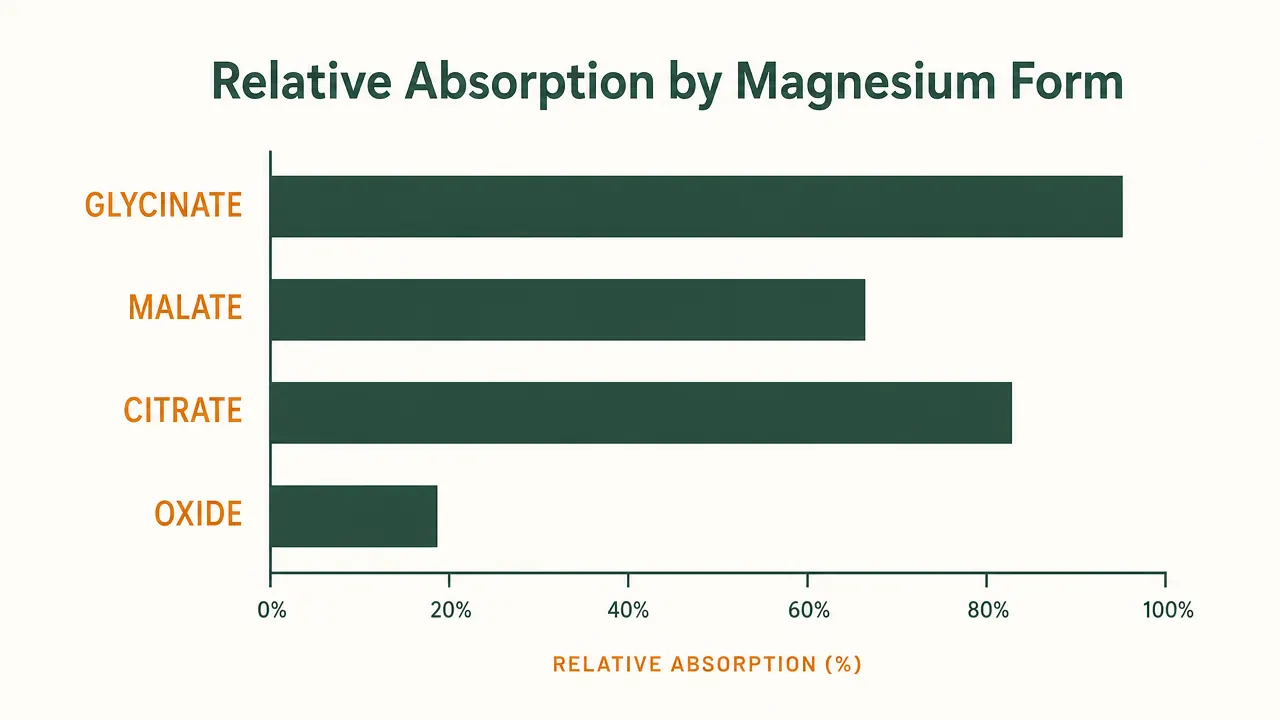
The Loose Stool Issue Is Real, and Here Is Why It Happens
When I bumped to three capsules for two weeks, I had loose stools for the first four days. Not dangerous, not painful, but not fun on a 400-mile run when rest stops are not guaranteed. Magnesium citrate in particular draws water into the intestine. That is actually the mechanism behind milk of magnesia as a laxative. At normal doses the effect is mild and most people tolerate it fine. Push the dose up and some people feel it immediately, some after a few days, and some not at all. It is individual.
BioEmblem uses only a portion of the total 300 mg as citrate, splitting the blend between glycinate, malate, and citrate. That is actually a thoughtful formulation choice because pure citrate at 300 mg would cause GI issues in a much higher percentage of people. Glycinate is the gentlest form on the stomach. Malate is somewhere in the middle. The triple blend is designed to balance absorption against tolerability. At the two-capsule dose, most people I have talked to have no GI complaints. At three capsules, a meaningful minority do. Come back to two and it goes away.
Magnesium is not a quick fix. Most people who see real improvement on cramps report it happening somewhere between week two and week four of consistent use, not night one.
When Magnesium Will Not Help Your Cramps (And Why)
This is the section I wish someone had sent me before I ordered my first bottle of a different brand four years ago. Leg cramps, especially the ones that hit at night, have multiple potential causes. Magnesium deficiency is one of them, and it is a common one in people who sweat heavily, drink a lot of coffee or alcohol, or do not eat enough green vegetables. But it is not the only one.
Dehydration is one of the most common triggers for calf cramps during and after long drives. If you are running on 32 ounces of water and three coffees all day, magnesium supplementation may help a little but will not solve the root problem. Similarly, low potassium or low sodium can cause cramping that mimics magnesium deficiency and does not respond to magnesium at all. If you have peripheral artery disease, restless legs syndrome (which is neurological, not nutritional in many cases), or neuropathy from diabetes, cramps may have nothing to do with your magnesium status. Poor circulation from spending 11 hours in a seat compressing the back of your thighs is a mechanical problem, not a supplement problem. I explain how compression socks address that specific issue in my magnesium form comparison, which also covers what blood tests can tell you about your actual levels.
The honest read: if you are consistently cramp-free during the day and only cramp at night, and if you suspect you eat a poor diet or drink a lot of caffeine, magnesium supplementation has a reasonable chance of helping you. If you cramp during the day, while working, or have cramps in muscles other than the calves and feet, you should talk to a doctor before assuming the answer is a supplement.

The Three-Form Blend Explained Without the Marketing Language
BioEmblem names the three forms right on the label: glycinate, malate, and citrate. Here is what those words actually mean in practice. Magnesium glycinate is magnesium bound to glycine, an amino acid. Glycine has mild calming effects on its own, and this form has among the highest bioavailability of any magnesium compound. It is well-tolerated and the preferred form if sleep is your primary goal. Magnesium malate is bound to malic acid and tends to be used more for energy production and muscle function. Some people find it slightly more stimulating than glycinate and prefer it in the morning. Magnesium citrate is the most common form in supplements and has good absorption, but it is the one most associated with the laxative effect at higher doses.
The rationale for blending all three is to get the absorption benefits of citrate, the sleep/nervous-system benefits of glycinate, and the muscle-function targeting of malate, without relying on a single large dose of any one form. On paper that is a solid approach. Whether the individual proportions in this specific product are optimal is harder to verify because BioEmblem does not disclose the exact breakdown of milligrams per form. They list the total elemental magnesium at 300 mg per serving but do not split the blend on the label. That is a minor transparency issue that is worth knowing.
What I Liked
- Three high-absorption forms in a single serving, which is better than cheaper oxide-only products
- Well-tolerated at the two-capsule dose for most people with no significant GI side effects
- 4.6-star rating from over 31,000 reviews suggests consistent quality control across batches
- Capsule format, no chalky powder taste, easy to take at bedtime
- No artificial fillers or synthetic dyes in the formula
- Glycinate content makes it a reasonable option for people targeting sleep quality alongside cramps
Where It Falls Short
- Blend ratios per form are not disclosed on the label, so you cannot know how much glycinate versus citrate you are actually getting
- Effects on cramps are typically slow: two to four weeks before many users notice a difference, and some never do
- Two-capsule serving means you are burning through a bottle faster than a single-capsule supplement at the same dose
- Citrate component can cause loose stools if you exceed the two-capsule dose or are particularly sensitive
- Will not help if your cramps are from dehydration, low potassium, circulation issues, or a neurological cause
- Not appropriate for people with kidney disease or several common medication classes without a doctor's sign-off
Who Should Not Take This Without Talking to a Doctor First
This section is not filler. If you have chronic kidney disease or are on dialysis, your kidneys cannot clear excess magnesium efficiently, and supplementation can lead to dangerously elevated blood levels. That is not a risk worth taking without medical supervision. If you take any of the following medication classes, you need to check with a pharmacist or physician before adding magnesium: certain antibiotics (fluoroquinolones and tetracyclines absorb less well when taken alongside magnesium), diuretics (which can either cause or worsen magnesium imbalance depending on the type), medications for type 2 diabetes, and certain heart medications including some used to treat arrhythmia. Magnesium can affect how these drugs are absorbed and how they behave.
Also worth noting: if you are pregnant or nursing, the upper intake limits are different and you should get a recommendation from your OB rather than a product page. This note applies to every magnesium supplement, not just BioEmblem. It is just rarely said plainly, so I am saying it here. Not medical advice, just common sense applied to supplement use.

Who This Is For
BioEmblem Triple Magnesium is a solid choice for a healthy adult over 35 whose diet is imperfect, who drinks a lot of coffee or sweats through work, who has been experiencing nighttime calf or foot cramps, and who wants to try a supplement approach before going the prescription route. It is also a reasonable option for people who have tried cheap drugstore magnesium oxide supplements and got no results, because oxide has the worst absorption of any magnesium form and is largely a waste of money for this use case. The triple-form formula gives you a real chance at actually getting magnesium into your cells where it does the work.
If sleep is part of the picture alongside cramps, the glycinate content makes this a more targeted choice than a straight citrate product. A lot of drivers I know are dealing with both: the calf wakes them up, and then they cannot get back down even after the cramp passes. Having glycine in the formula may help with that second part.
Who Should Skip It
Skip this if you have kidney disease, are on dialysis, or have been told to monitor your kidney function closely. Skip it if you are already taking a magnesium-containing supplement and do not want to do the math on whether you are doubling up. Skip it if your cramps are clearly from dehydration and you are not making any effort to drink more water, because no supplement compensates for running dry all day. Skip it if you expect to notice a difference in two or three days. Magnesium does not work like ibuprofen. If you are not willing to run it consistently for three to four weeks and track your results, you will probably decide it does not work and quit before you find out whether it would have.
And skip it, at least without a conversation with your doctor, if you are taking medications in any of the classes I listed above. A two-minute call to your pharmacist with the product name and your medication list is worth more than anything I can write here.
If oxide-based magnesium has let you down before, the form really does make the difference.
BioEmblem uses glycinate, malate, and citrate together, three forms with real absorption versus the cheap oxide most drugstore bottles use. If your cramps have a magnesium component, this is the version that gives you the best shot at finding out.
Amazon Check Today's Price on Amazon →