

You're dead asleep after a ten-hour run and then your calf goes off like a mousetrap at 2 a.m. I drove over-the-road for years and nighttime leg cramps were as predictable as diesel prices going the wrong way. You bolt up, you grab the muscle, you limp around the hotel room or the sleeper berth until it lets go, and then you lie back down knowing it might happen again before the alarm. The good news is that magnesium deficiency is one of the most common and most fixable reasons this happens. This guide walks through the five things that, together, actually stop the cycle.
Before we get into the steps: this is not medical advice. Leg cramps can occasionally signal something more serious, and magnesium supplements interact with certain medications and are not appropriate for people with kidney disease. Check with your doctor before starting any new supplement, particularly if you have kidney issues, take blood pressure medications, antibiotics, or diuretics. That said, for the majority of healthy drivers, nurses, and warehouse workers who run chronically low on this mineral, what follows is a practical starting point.
Still Getting Woken Up by Calf Cramps? This Is the Magnesium Form That Actually Gets Absorbed.
BioEmblem Triple Magnesium Complex uses glycinate, malate, and citrate together. Each of those forms absorbs better than the cheap oxide tablets in the drugstore. Over 31,000 ratings at 4.6 stars on Amazon. This is the one I recommend starting with.
Amazon Check Today's Price on Amazon →Step 1: Understand Why Drivers and Shift Workers Run Low on Magnesium
Magnesium is the mineral your muscles use to relax after a contraction. When levels drop, the muscle gets stuck in the contraction part of the cycle. That's a cramp. Most adults are already mildly deficient because the standard American diet is short on leafy greens, nuts, and legumes, but if you're sitting behind a wheel or standing on concrete for ten hours and sweating, you're losing extra magnesium through perspiration. Add in that most road food is salt-heavy processed fare, and the deficit compounds shift after shift.
The other piece is that stress hormones, including the cortisol spike that comes with running late, dealing with dispatch, or being on a busted sleep schedule, deplete magnesium faster. Drivers and nurses live in low-level stress states that quietly drain this mineral. Knowing this matters because it tells you the fix isn't a one-time thing. You need consistent daily replenishment, not just an occasional dose when the cramps get bad.
What you eat matters here too. Alcohol, even moderate amounts, increases magnesium excretion in urine. Coffee and high-sugar diets do the same at a slower rate. If your post-shift routine involves a few beers and bad sleep, you're running a daily deficit that no single dose will cover. That's the context you need before the steps actually make sense.
Step 2: Pick the Right Form of Magnesium (This Is Where Most People Go Wrong)
Walk into any pharmacy and the cheapest option is magnesium oxide. It's also the form that absorbs worst, roughly 4 percent bioavailability in most studies. What doesn't get absorbed goes straight to your gut and acts as a laxative. That's why some people try magnesium, spend a couple of days on the toilet, and conclude it doesn't work. It's not that magnesium doesn't work. It's that they took the wrong form.
The forms worth using for cramp prevention are magnesium glycinate, magnesium malate, and magnesium citrate. Glycinate binds magnesium to the amino acid glycine, which also has a mild calming effect and is gentle on the stomach. Malate is paired with malic acid and tends to be good for muscle fatigue and energy metabolism. Citrate absorbs reasonably well and is the most widely studied. Each one has a slightly different strength. A product that combines all three, like BioEmblem Triple Magnesium Complex, gives you coverage across all the mechanisms without having to buy three separate bottles. That's why it's the one I point people toward.

BioEmblem puts 300 mg of elemental magnesium per serving across those three forms. The capsules are easy to swallow, don't have a strong aftertaste, and I've heard very few complaints about stomach upset compared to cheaper oxide products. At over 31,000 Amazon ratings sitting at 4.6 stars, the feedback at scale lines up with my experience. If you want to see a deep-dive into the glycinate-malate-citrate blend specifically, check the BioEmblem review on this site.
Step 3: Nail the Timing and Dose Before Bed
Timing matters as much as the form. Most of the leg cramps I used to get hit in the early hours of the morning, roughly 2 to 4 a.m. That window matches a natural dip in muscle mineral concentrations that happens when you've been horizontal and fasting for a few hours. Taking your magnesium in the evening, about 30 to 60 minutes before you go to sleep, puts peak absorption right where you need it for that overnight window.
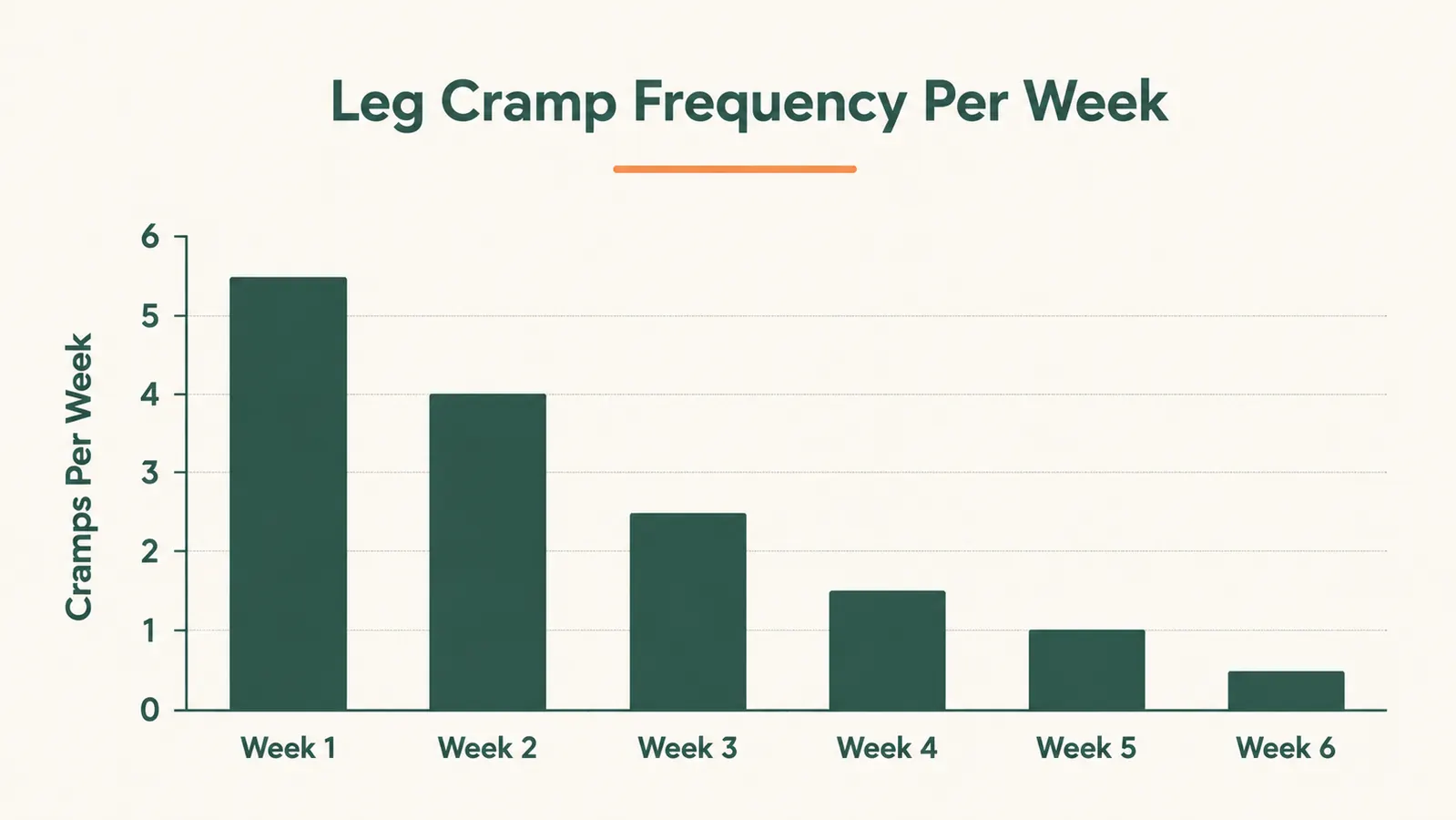
Start with the full serving size on the label, which for BioEmblem is two capsules providing 300 mg elemental magnesium. Don't go above that without talking to your doctor, especially in the early weeks. Some people see cramp reduction in three to five days. Others take two to three weeks before the effect becomes consistent. Give it at least 21 days before you decide it isn't working. Also: take it with a full glass of water. Dehydration alone can trigger cramps and magnesium supplements perform better when you're adequately hydrated.
One thing to watch: if you take any medications, particularly tetracycline or quinolone antibiotics, certain blood pressure drugs, or diuretics, magnesium can interfere with absorption or amplify effects. Don't assume a supplement is automatically safe because it's sold over the counter. Again, a quick call to your doctor or pharmacist takes two minutes and is worth it.
Step 4: Drink More Water and Check Your Other Electrolytes
Magnesium does not work in isolation. If you're dehydrated or low on potassium and sodium, you can have perfect magnesium levels and still cramp. Drivers are chronically underhydrated because bathroom stops are inconvenient and coffee is not a substitute for water. A rough target is half your bodyweight in ounces per day. If you're 200 pounds, you want around 100 ounces of water. That's roughly a gallon, and most working adults are getting nowhere close.
Magnesium helps your muscle relax after it contracts. No magnesium means the muscle stays locked. That's the cramp you feel at 2 a.m. Fix the mineral, fix the night.
Potassium is the other electrolyte that gets ignored. Bananas are the cliche, but a medium banana has about 422 mg of potassium and you need 2,600 to 3,400 mg per day. Potatoes, avocados, and leafy greens are denser sources. On the road, a small bag of unsalted roasted pumpkin seeds and a banana at a truck stop is a real combination that covers magnesium, potassium, and some zinc in one snack.
On long runs, consider an electrolyte drink mix once a day, one without a huge sugar load. Brands like LMNT or DripDrop are popular with drivers because they're concentrated and don't require a lot of water to dose. The point is that magnesium supplementation works best inside a broader strategy of staying hydrated and keeping the full electrolyte profile in range, not as a standalone magic fix.
Step 5: Add a Two-Minute Calf Stretch Before You Lie Down
This one costs nothing and I was skeptical of it until I stopped being lazy and actually did it consistently. After a long drive or a long shift, the calf muscles and the tibialis anterior on the front of the lower leg are tight from holding positions they were never designed to hold for eight hours straight. When you lie down and the muscles cool, they're still in that shortened state. A two-minute stretch before sleep gives them a chance to lengthen before you go horizontal.

The standing wall stretch is simple. Put both hands flat on a wall, step one foot back with a straight knee and the heel flat on the floor, and hold 30 seconds. You should feel a strong pull in the calf. Switch sides. Then do the same stretch but with a slight bend in the back knee, which targets the soleus muscle deeper in the calf. That's it. Four positions, two minutes total. Pair that with your magnesium before bed and most people see a meaningful reduction in cramp frequency within two weeks.
Foot dorsiflexion is also useful if you get cramps in the arch of the foot. Sit on the edge of the bed, pull your toes back toward your shin and hold for ten seconds, release, repeat five times. This keeps the plantar fascia and the intrinsic foot muscles from going into spasm overnight. Takes less than a minute and combines well with the calf stretch as a pre-sleep ritual.
What Else Helps
Compression socks during your shift reduce the pooling of blood in the lower legs that makes cramps more likely overnight. When blood pools in the calves throughout a long day of sitting, the muscles are already fatigued and mineral-depleted by the time you get horizontal. A graduated compression sock keeps circulation moving and reduces that end-of-day deficit. If you're not already wearing them on long runs, that's a separate investment worth making.
Tart cherry extract is another supplement that some shift workers and athletes use for overnight muscle recovery. The research is less robust than for magnesium, but it appears to reduce post-exercise inflammation and may support sleep quality. It's not a first-line cramp fix, but if magnesium alone isn't getting you all the way there, adding tart cherry concentrate or capsules before bed is a reasonable next layer.
Heat on the muscle during an active cramp is more effective than cold. If you do get a cramp, a heated blanket or a portable heating pad applied to the calf will help the muscle release faster than stretching alone. Some drivers keep a small plug-in heating pad in the sleeper for exactly this reason. That's the kind of real-world fix that makes an actual difference at 3 a.m. when you don't want to be doing yoga poses in the dark.
When to See a Doctor
Most nighttime leg cramps in otherwise healthy people are benign, muscle fatigue combined with electrolyte gaps. But there are situations where they are a signal of something that needs attention. If your cramps are severe and frequent (more than three nights a week), if they involve the thigh or hamstring rather than just the calf, if you have swelling or skin changes in the legs, or if the cramps started after you began a new medication, make an appointment. Peripheral artery disease, venous insufficiency, certain medications (statins, diuretics, beta-blockers), thyroid conditions, and kidney or liver problems can all cause or worsen leg cramps. Magnesium will not fix those.
This is especially important if you have any kidney problems at all, even mild chronic kidney disease. The kidneys excrete excess magnesium, and supplementing when the kidneys are impaired can cause magnesium to build up to dangerous levels. That's a medical situation, not a supplement situation. Talk to your doctor first, full stop. For everyone else who is otherwise healthy and just running a dietary deficit from years on the road, the protocol above is a reasonable, low-risk starting point.
For more background on why shift workers specifically tend to run low on this mineral, see the article on 10 reasons truck drivers need magnesium supplement. And if you want a closer look at how the BioEmblem glycinate-malate-citrate blend compares to other options before you buy, the full review is at magnesium for leg cramps night shifts review.
Five Steps Won't Work Without the Right Magnesium. Here's the One Worth Starting With.
BioEmblem Triple Magnesium Complex covers glycinate, malate, and citrate in a single 300 mg serving. High absorption, easy on the stomach, 31,000-plus reviews at 4.6 stars. Take two capsules 30 to 60 minutes before bed and give it three weeks.
Amazon Check Today's Price on Amazon →