
If you drive for a living, you already know what your legs look like at the end of a ten-hour run. The ankles thicken up. The calves get tight and feel heavy. Sometimes the skin around the top of your sock leaves a ring you can press a thumb into. That is not just fatigue. That is fluid pooling because your calf muscles, which are supposed to act as a second pump for your blood, have been sitting still against a seat for the better part of a day. Your heart pushes blood down fine. Getting it back up is the problem.
I drove long-haul for eleven years before a buddy on my terminal pointed me toward compression socks. My first reaction was that those were for old ladies in hospital waiting rooms. I was wrong. A compression sock does one specific thing: it squeezes your lower leg hard enough that the veins cannot expand as wide as they want to, which keeps blood moving back up toward your heart instead of pooling around your ankles. It is a mechanical fix for a mechanical problem. This guide walks through the five steps I now use on every long run to keep my legs workable from the first load to the last.
Your legs are swollen because blood is pooling. Copper Compression Socks squeeze it back up.
Copper Compression Socks for Women and Men come in a six-pair pack so you always have a clean pair ready. Rated 4.5 stars across nearly 48,000 reviews from nurses, truck drivers, and anyone on their feet or in a seat all day. The 15-20 mmHg graduated compression is the sweet spot for daily long-shift use.
Amazon Check Today's Price on Amazon →Step 1: Pick the Right Compression Level Before You Buy
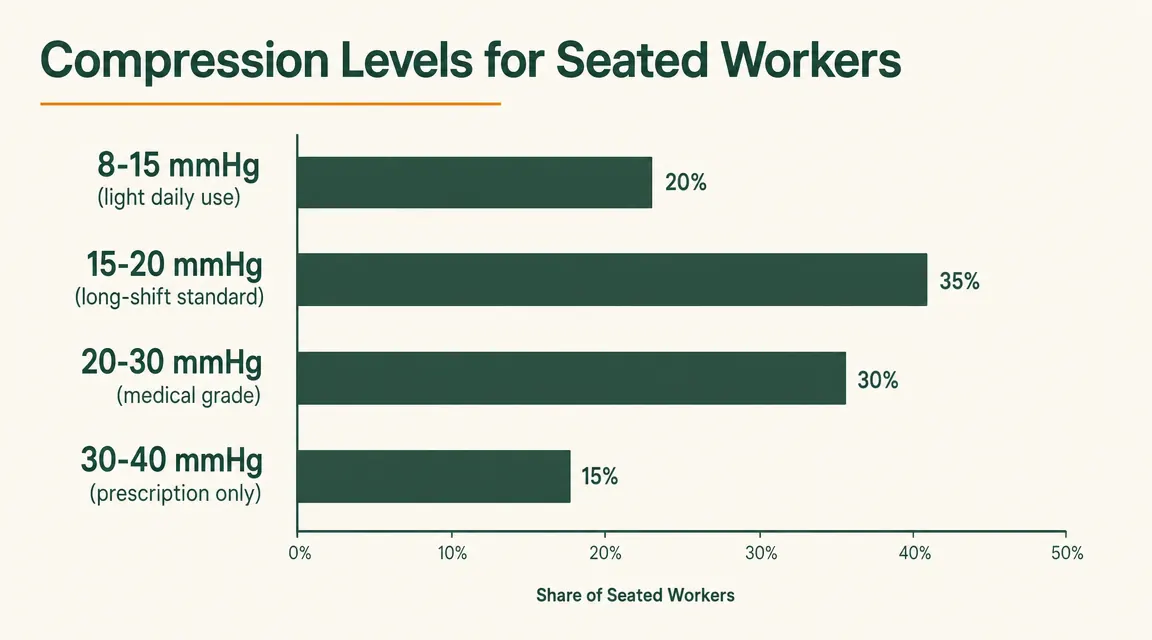
Compression is measured in millimeters of mercury, abbreviated mmHg. The number tells you how much squeeze the sock applies at your ankle. This matters more than brand, color, or copper content. Buy the wrong level and the socks either do nothing or cut off your circulation and make things worse.
For most drivers, nurses, and warehouse workers, the correct level is 15-20 mmHg. That is graduated compression, meaning tightest at the ankle and gradually looser up the calf, which is exactly the gradient you need to push blood uphill. Below 15 mmHg (the 8-15 range) is too light to do much on a ten-hour sit. Above 20 mmHg starts moving into medical territory and you want a doctor in the loop before you go there, because you can restrict flow if you have arterial issues. The Copper Compression Socks I use are in the 15-20 mmHg range, which is the standard for occupational use. That is where I would start any driver or nurse who asks me.
One more thing on sizing: measure your calf circumference, not just your shoe size. A sock that is too wide at the calf will slide down and bunch behind your knee, which can actually create a tourniquet effect in the fold. Measure at the widest point of your calf, then match to the brand's chart. Copper Compression includes a straightforward size guide. When in doubt between two sizes, go snugger.
Step 2: Put Them On Before You Sit Down, Not After
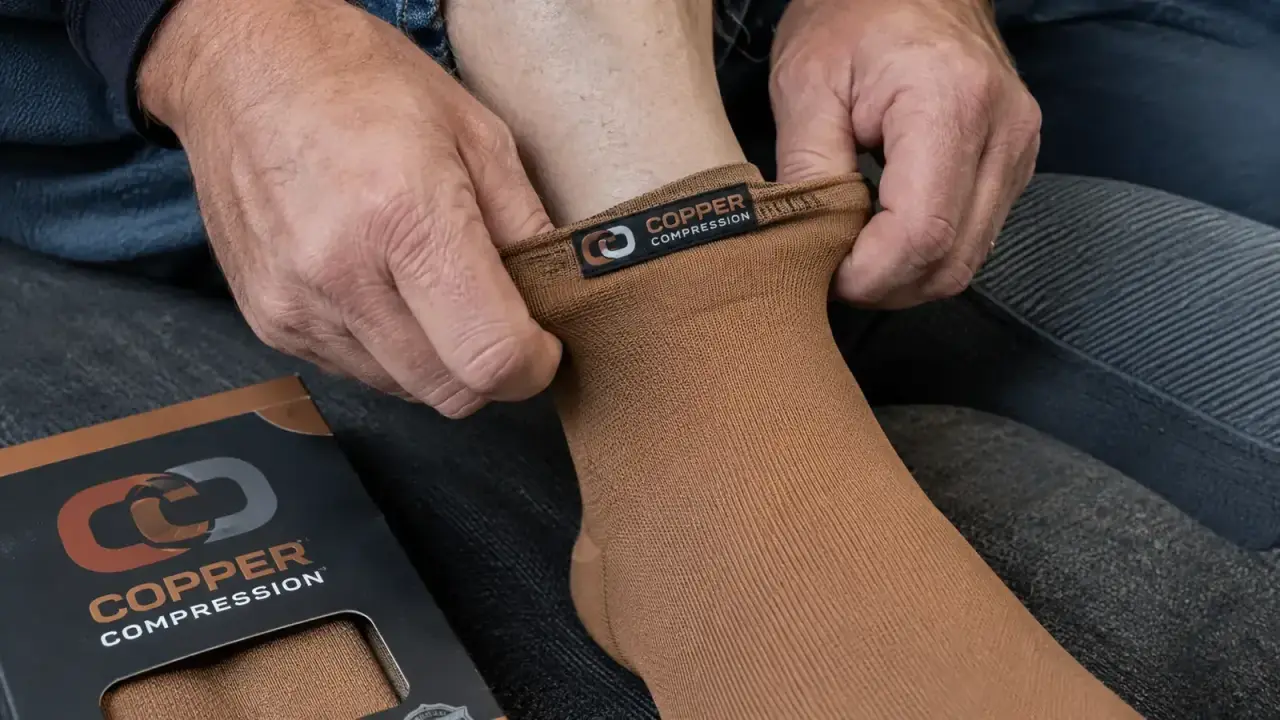
This is where most people get it backwards. They pull on compression socks at the end of a shift when their ankles are already the size of a grapefruit, and they wonder why it is miserable. The sock is supposed to prevent the pooling, not fight it after the fact. Put the socks on in the morning, before you climb up into the cab or start your floor shift, while your legs are still at their smallest.
The technique matters too. Do not bunch the sock and try to stretch it over your foot. Turn the top of the sock inside down to the heel pocket, put your foot into it correctly, then roll the cuff up your calf in sections. Work from the toe toward the knee in small rolls, smoothing as you go so there are no folds or ridges. Ridges mean pressure points. If you have used surgical stockings after a procedure, it is the same motion. It takes about ninety seconds once you have done it a few times. Copper Compression socks have a toe seam and a clearly defined heel pocket that makes this easier than cheaper generics I have tried.
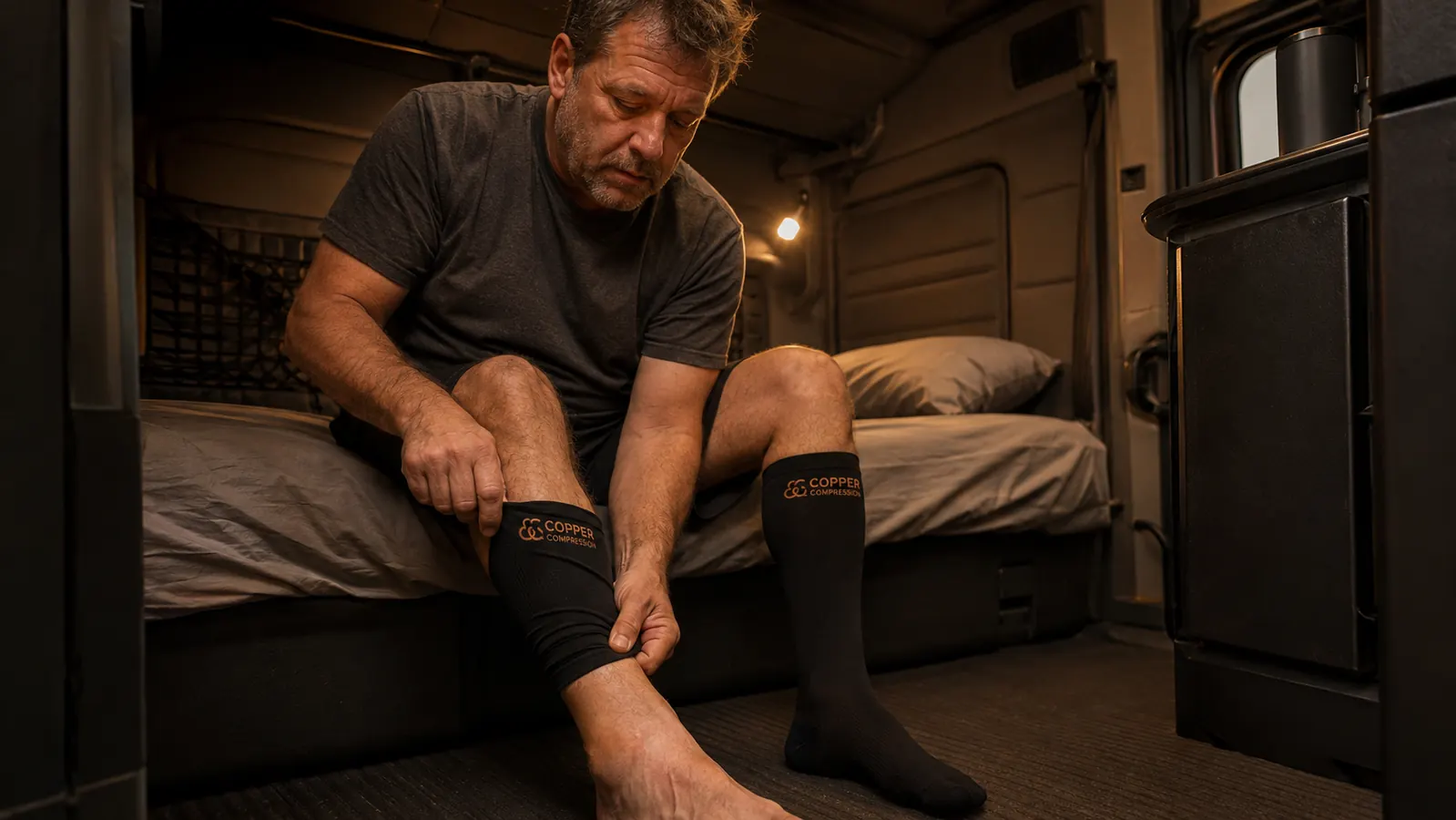
If your shift starts at 4 a.m. and you cannot be bothered with this routine at home, keep a pair in your cab bag and put them on in the parking lot before pre-trip. That still counts.
Step 3: Build In One Ankle-Pump Set Every Two Hours
Compression socks are a passive tool. They slow the pooling but they do not stop it entirely if you sit dead-still for eight hours straight. The calf muscle pump needs a little activation. Every two hours, when you stop to fuel or hit a rest area, do twenty ankle pumps before you step out of the cab. Sit with your heels on the floor, lift your toes toward your shins, then press them down as if you were pushing a gas pedal. That full-range motion squeezes your calf against the compression fabric and physically milks the fluid back upward.
If stopping every two hours is not possible on your route, do the ankle pumps at red lights or while you wait at a dock. You can also circle your ankles ten times each direction. The goal is to get the calf contracting at least a few times every hour. Nurses on floor shifts do this automatically because they walk constantly. Drivers have to build the habit deliberately because the body's default when seated is to do nothing.
The calf muscle pump is your body's second heart for moving blood out of your lower legs. Compression socks do their best work when you wake that pump up every couple of hours, even for sixty seconds.

Step 4: Elevate Your Legs for at Least Ten Minutes After Your Shift
Gravity worked against you all day. Use it on your side for a few minutes when you are done. You do not need a recliner or a yoga mat. In the sleeper berth, lie flat and prop your calves on a rolled sleeping bag or a duffel. At home, put your feet up on the couch armrest while you watch the first part of the news. The target is getting your feet above the level of your heart, which lets gravity pull the pooled fluid back toward your core.
Ten minutes does a noticeable amount of work. Twenty minutes is better. Keep your compression socks on for this, especially in the first thirty minutes after your shift. The socks support the veins while they empty out, and removing them immediately after sitting all day allows a rapid pressure drop that can feel uncomfortable. Let the elevation do its job with the socks still on, then take them off, rinse them in the sink, and hang them up. Copper Compression socks are machine-washable in cold but air-drying them extends their life significantly. The elastic in graduated compression socks degrades faster in the dryer.
Step 5: Stay Ahead of Your Fluid Intake and Watch What You Eat on Long Hauls
This sounds like it runs opposite to common sense: drink more water to reduce swelling? Yes. When you are dehydrated, your body retains sodium and fluid in your tissues as a survival response. Drivers often deliberately cut water to avoid bathroom stops, especially on runs without many rest areas. The short-term convenience creates worse swelling by the end of the day. Aim for a minimum of 64 ounces of water on a full shift day. Plain water or low-sodium electrolyte drinks. Not soda, not energy drinks with high sodium.
On the food side, fast-food sodium is the hidden driver of a lot of leg swelling that gets blamed on the sitting. A single fast food meal can have 2,000 to 3,000 milligrams of sodium. The daily recommended ceiling is under 2,300 milligrams total. If you are eating truck-stop food for two out of three meals and then wondering why your ankles are wrecked by the end of the week, sodium is a big part of the picture. Compression socks cannot fully counteract a diet that keeps your blood sodium high enough to pull fluid into your tissues.
What Else Helps
The five steps above are the core protocol. A few things I have added over time that make a meaningful difference: a small foam wedge under the truck mat to tilt my heel slightly upward gives the calves a gentle passive stretch over the course of a long haul. It cost very little at a trucking supply store. Second, if you have access to a short stretching window at a dock, calf raises off a step edge do more for lower-leg circulation in two minutes than any supplement or gadget I have tried. Stand on the edge of the step, lower your heels below the step level, then rise onto your toes. Three sets of fifteen. Third, night-time magnesium has helped me with the restless leg feeling that sometimes accompanies heavy leg swelling after a long run. That is a separate conversation but worth mentioning as a sleep-recovery addition.
On the compression sock side, I will be straight with you: there are cheap two-dollar pairs at truck stops. I have tried them. They do not maintain consistent pressure across the calf the way a properly engineered graduated sock does, and they start losing elasticity after about fifteen washes. The Copper Compression six-pair pack works out to a reasonable per-pair cost and holds up well past fifty washes in my experience. You also get enough pairs to have clean ones available every day without doing laundry every night, which matters when you are living out of a bag on a multi-day run.
One thing that does not help as much as advertised: compression sleeves without a foot component. Sleeves only cover calf to knee. The fluid from the ankle and foot area has nowhere to go except stack up at the bottom of the sleeve. For seated workers, full compression socks that cover from the toe to below the knee are the right tool. Sleeves make more sense for runners who already move their feet continuously. For sitting, use the full sock.
If your leg swelling does not respond to this protocol after two to three weeks of consistent use, get to a doctor. Persistent unilateral swelling (one leg much worse than the other), swelling that is warm or red, or swelling accompanied by shortness of breath are not problems you solve with socks. Those symptoms can point to deep vein thrombosis or cardiac issues and need a clinical eye. Compression gear is for the garden-variety occupational edema that drivers and nurses deal with every shift. It is not a substitute for medical evaluation if something seems off.
If your legs are thick and heavy by the end of every shift, this is the fix that actually works during the shift.
Copper Compression Socks come in a six-pair pack, are rated 4.5 stars by nearly 48,000 buyers, and are sized for men and women doing exactly the kind of work you do. Nurses, rideshare drivers, warehouse staff. Put them on in the morning and notice the difference by the time you clock out. Check today's price on Amazon and see if your size is in stock.
Amazon Check Today's Price on Amazon →Related reading: if you want a deeper look at how these socks hold up over time and what the washing and sizing experience is actually like, check out the Copper Compression Socks review from a twelve-hour shift perspective. And if you are trying to decide whether the full sock or a sleeve is the better buy for your specific situation, the ten reasons nurses and truck drivers need compression socks piece breaks down the mechanics in more detail.